
 chinpost
More than 80% of Iran’s foreign trade moves by sea. The reason is simple: for commercial volumes, no other mode pushes the cost per unit of goods as low as a ship does. But this seemingly simple method is full of decisions that, taken wrong, either waste your money or leave your cargo waiting for weeks: FCL or LCL? Which port in China? Bandar Abbas or Chabahar? FOB or CIF?
This guide is the complete reference for sea freight from China to Iran in 2026: from choosing between a full container and shared cargo, to origin and destination ports, real timelines, documents, costs, and the mistakes hundreds of importers repeat every year.
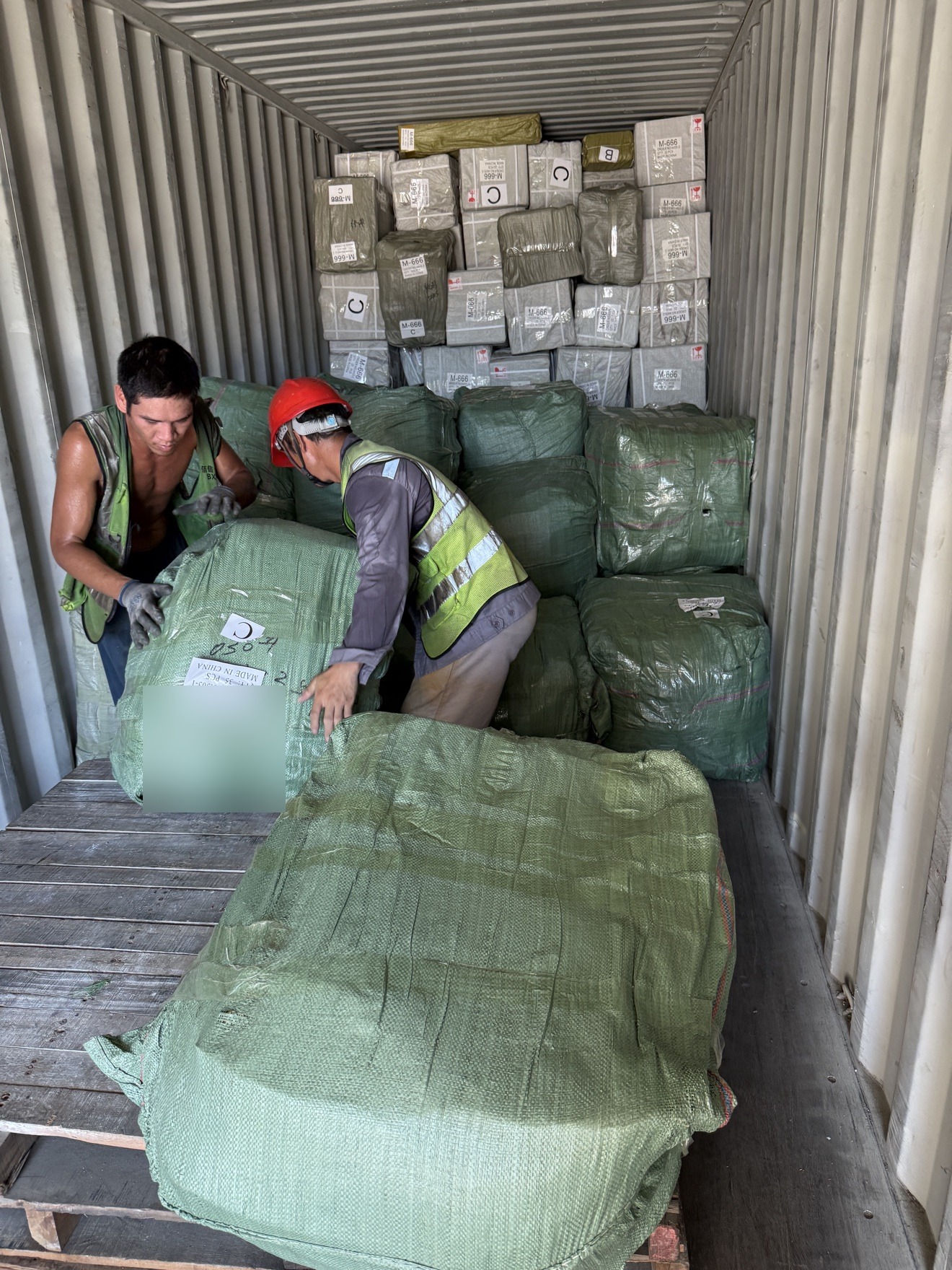
FCL vs LCL — Make This Decision First
These two words determine the whole logic of sea freight:
- FCL (Full Container Load): one whole container just for your cargo — from a 20ft (about 28 CBM) to a 40ft (about 58 CBM).
- LCL (Less than Container Load): your cargo shares a container with several other shippers; you pay only for your own volume (per CBM).
| Criterion | FCL | LCL |
|---|---|---|
| Right volume | Above ~15 CBM | Below ~15 CBM |
| Unit cost | Lower for high volume | Higher (fixed consolidation costs) |
| Speed | Faster (no consolidation stops) | Slower (2–7 extra days for consolidation/deconsolidation) |
| Cargo safety | Higher (dedicated container, your seal) | Lower (more handling, higher damage risk) |
| Formalities | Simpler | More complex (coordinating several shippers) |
| Best for | Manufacturers, wholesalers | Starters, market tests, small orders |
Field note: the 15 CBM line is not an iron rule. In the low season, forwarders discount to fill a container and LCL can stay competitive up to 18 CBM; in peak season it is the reverse. For any shipment above 10 CBM, get a quote for both options.
Origin Ports in China — Where to Load
Choosing a port is a mix of “closeness to the factory” and “number of services to Iran”. The most important ones:
| Port | Character | Approximate transit to Bandar Abbas |
|---|---|---|
| Shanghai | Largest and busiest; most direct services | 17–28 days |
| Ningbo | Close to Yiwu and Zhejiang province; first choice for Yiwu goods | 20–28 days |
| Shenzhen | Modern and fast; Guangdong electronics hub | 17–25 days |
| Guangzhou | Good Middle East coverage; close to wholesale markets | 20–28 days |
| Qingdao | North China option | 22–30 days |
| Tianjin | Close to Beijing; usually pricier for the Iran lane | 25–30 days |
Note: sea transit is usually 3–5 weeks; the table figures are approximate and the exact figure for each service must be taken from the liner schedule or your forwarder.
Common mistake: many shippers load from Shenzhen automatically because their supplier is in Guangzhou, while if the factory is in the northern suburbs, Guangzhou — or even a combined route — may be cheaper. Ask your forwarder to quote the “delivery cost to the port” (inland transport) separately; then the comparison is transparent.
Destination Ports in Iran — Where the Cargo Unloads
| Port | Role |
|---|---|
| Bandar Abbas (Shahid Rajaee) | Iran’s main container port; most services and clearance facilities |
| Bushehr | Second container option; good scheduling for some lanes |
| Khorramshahr | Container and bulk; access to western and south-western markets |
| Imam Khomeini | Mostly bulk and petrochemical; more limited container capacity than Bandar Abbas |
| Chabahar | Iran’s only ocean port; in 2026 taken seriously as the alternative to Bandar Abbas |
Note for 2026: with the disruptions on the Strait of Hormuz route, being “single-port” is a risk. Professional importers this year keep a Chabahar scenario, or a sea–rail combination, on the table for sensitive cargo.
Port-to-Port Rates — Real 2026 Prices
The rates below are ChinPost’s service rates in 2026. Sea freight depends on the season and the liner and may change; get the exact rate for that week on WhatsApp:
| Route | Rate | Sea transit time |
|---|---|---|
| China → Mersin (Turkey) — 20ft container (freight) | $3,800 | 25–35 days |
| China → Mersin (Turkey) — 40ft container (freight) | $5,000 | 25–35 days |
| China → Dubai (Jebel Ali) — LCL | 1,800 CNY per CBM | 25–35 days |
| China → Bandar Abbas — FCL / LCL | Rate of the day — ask on WhatsApp | 25–35 days |
See the full breakdown of shipping and clearance costs in our shipping cost guide from China to Iran.
Real Timeline — From Factory Door to Your Warehouse
The numbers companies quote are usually “port-to-port transit”. See the full table:
| Stage | FCL | LCL |
|---|---|---|
| Factory pickup + transport to the China port | 2–5 days | 2–5 days |
| Export formalities + waiting for the vessel | 3–7 days | 3–7 days |
| Sea transit to Bandar Abbas | 20–30 days | 25–35 days |
| Consolidation/deconsolidation at origin and destination | — | 2–7 extra days |
| Clearance in Iran | 5–10 days | 5–10 days |
| Inland transport to Tehran/warehouse | 2–4 days | 2–4 days |
| Approximate total | 30–45 days | 40–50 days |
So when someone says “it arrives in 25 days”, they are only talking about sea transit. For production and sales planning, always use the door-to-door figure and add a 10% safety margin.
Transshipment — Why Some Cargo Spends 10 Extra Days in Transit
Few people ask “direct or transshipment?” when getting a quote, yet this one question can add or remove two weeks from delivery time. Transshipment means the vessel unloads your cargo at an intermediate port (for example Jebel Ali or Karachi) and another vessel carries it to Bandar Abbas.
A direct service is usually pricier but faster and more predictable; transshipment is usually cheaper but carries two risks: waiting for the second vessel (sometimes 5–10 days) and an extra container move (damage risk). For time-sensitive cargo, always make “direct service” a condition and have it written into the bill of lading. If a price is far below the market norm, it is probably a transshipment with a long stop — ask first, then decide.
Documents Needed for Sea Freight to Iran
Without these, the cargo stays in the port and you pay demurrage:
- Proforma Invoice — basis for order registration and currency allocation
- Packing List — packaging details, weight and dimensions
- Bill of Lading — the title document; without the original (or a Telex Release) clearance is impossible
- Certificate of Origin
- Valid commercial card
- Goods-specific permits (standards, health, energy, etc.) — depending on the goods
- Cargo insurance policy
Field note: a mismatch between the packing list and the actual cargo is the most common reason for a stop at customs. Before loading, re-check the carton count with the supplier — even a simple mismatch in carton numbers can cause days of delay and storage costs.
Most-Used Incoterms in Sea Freight
- EXW: delivery at the factory gate; everything is on you. Only when you have a team/representative in China.
- FOB: the seller brings the cargo onto the vessel deck; the main freight is yours. The most popular option for experienced importers.
- CIF: the seller also pays freight + basic insurance to the destination port. Easier, but the choice of vessel and insurance is out of your hands.
- DDP: the shipping company takes care of everything up to clearance in Iran. It looks pricier, but for starters and small cargo the total cost and hassle are lower.
5 Mistakes Repeated Every Year
1. Comparing prices that are not on the same level. They compare a Shanghai FOB quote with a Bandar Abbas CIF quote and pick the cheaper one — while the second one includes insurance and freight. Always ask: “exactly how far does this price go, and what is inside it?”
2. Ignoring demurrage. Free days for the container at the port are limited (usually 7–10 days, but only your contract counts). If the clearance documents are not ready, the daily container penalty quickly exceeds the saving you negotiated.
3. Skipping insurance “to save money”. 0.3–0.5% of the goods’ value against the risk of sinking, fire or theft — that gamble is not worth it.
4. Ordering in peak season with no time buffer. They order Chinese New Year cargo in February and expect it in the warehouse for Nowruz. In peak season, a one- to two-week delay is not unusual.
5. Handing everything to the cheapest forwarder. The difference between a professional forwarder and a cheap intermediary shows on the day of crisis: when the vessel is missed or the cargo is stuck in transshipment, who answers?
Frequently Asked Questions
How much does a 20ft container hold?
About 28 CBM of usable volume and up to ~28 tonnes of weight (also mind Iran’s road weight limits). A 40ft holds about 58 CBM.
How exactly is LCL priced?
Per CBM or per tonne — whichever is greater. Plus fixed document and warehousing costs shared between the shippers.
Can cargo be delivered directly to Tehran?
Not by ship; the nearest delivery is the port. The onward leg is by truck (or, in the near future, a rail combination) and its cost is separate.
What is the difference between an original bill of lading and a Telex Release?
With a Telex Release there is no need to send the physical bill of lading and clearance is faster; for the China–Iran lane, where international post is slow, in practice many forwarders prefer this method.
What do I do if the Strait of Hormuz is disrupted?
Agree the alternative scenario with your forwarder in advance: an alternative port (Chabahar), the Sarakhs rail route, or a sea–land combination. Cargo without a plan B costs dearly in a crisis.
What is the THC charge and who pays it?
THC, or Terminal Handling Charge, is the cost of unloading/loading and moving the container at the terminal; the amount differs by port and liner. Incoterms set the general framework of responsibilities, but exactly who pays the origin and destination THC must be checked explicitly in the quotation and the shipping contract; what matters in the quote is whether it is inside the price or separate.
ChinPost With You
With teams based in China and Iran, ChinPost manages your FCL and LCL sea freight from the factory door to your warehouse: space booking from China’s main ports, LCL consolidation, bill of lading issuance, insurance, clearance from Bandar Abbas and nationwide delivery. For the rate of the day and space booking, message ChinPost on WhatsApp.
Last updated: November 2026
Related guides: Shipping Cost from China to Iran · Customs Clearance from China to Iran · DDP Shipping from China to Iran · Persian original: حمل دریایی از چین به ایران

